Polyurethane is not a single material — it is a family of materials produced by different chemistry and processing routes. The two most common forms in industrial applications are cast (thermoset) polyurethane and thermoplastic polyurethane (TPU). They share a name, share some properties, and are frequently confused by buyers who are not specialists in elastomeric materials.
The differences between them are fundamental, not superficial. Understanding those differences allows engineers and procurement managers to specify correctly and avoid substituting one for the other in applications where the distinction matters.
How Cast Polyurethane is Made
Cast polyurethane — also called thermoset polyurethane — is produced by mixing two liquid components (a polyol and an isocyanate), pouring the mixed liquid into a mould, and allowing it to react and cure in the mould. The chemical reaction creates a three-dimensional crosslinked polymer network.
The crosslinked structure is the key characteristic of cast polyurethane. Once cured, the material cannot be remelted — the chemical bonds that form during curing are permanent. This is analogous to the difference between concrete (which sets permanently) and wax (which can be remelted).
The crosslinked structure gives cast polyurethane its combination of high strength, high abrasion resistance, and relatively high temperature resistance compared to thermoplastic alternatives. It also means cast polyurethane can be formulated across a very wide hardness range — from very soft to near-rigid — by adjusting the chemistry of the two components.
How Thermoplastic Polyurethane (TPU) is Made
Thermoplastic polyurethane is produced as a solid granule or pellet by a reactive extrusion process, then processed into finished products using injection moulding, extrusion, or blow moulding — the same processes used for standard engineering thermoplastics like nylon and polypropylene.
TPU does not crosslink during processing. Its polymer chains are linear and can be remelted and reprocessed — this is what makes it thermoplastic. The processing route allows high-volume production of complex shapes with tight tolerances and very short cycle times.
TPU covers a hardness range of approximately 60A to 80D, similar to cast polyurethane, but cannot reach the very soft formulations of cast polyurethane (below 50A), and its properties at the hard end differ from cast grades.
Performance Differences That Matter
Abrasion resistance: Cast polyurethane generally outperforms TPU in abrasion resistance, particularly in harder grades. This is a consequence of the crosslinked structure — the polymer network holds together under abrasive loading in a way that linear thermoplastic chains cannot. For high-wear applications in mining and bulk handling, cast polyurethane is typically the better specification.
Temperature resistance: The crosslinked structure of cast polyurethane maintains mechanical properties at elevated temperatures where TPU will soften and lose strength. For applications near hot processing equipment or in environments with elevated ambient temperatures, cast polyurethane performs more reliably.
Run size economics: TPU injection moulding requires expensive steel tooling and produces identical parts in very short cycle times — the economics work at high volumes (thousands to millions of parts). Cast polyurethane tooling is less expensive and can be used for runs from one piece upward — the economics work at any volume, including prototypes. This is why custom and low-volume industrial components are almost always cast rather than injection moulded.
Chemical resistance: Both materials resist oils, fuels, and most industrial chemicals, but the specific resistance profile differs by formulation. Cast polyurethane offers more flexibility in formulation chemistry, allowing specific resistance profiles to be achieved for demanding chemical environments.
When to Use Each
Cast polyurethane: custom industrial components, prototypes, low-to-medium volume production, high-wear applications, large components, and any application requiring a hardness below 60A or a very hard grade with maximum abrasion resistance.
TPU: high-volume consumer and industrial products, complex geometries requiring injection moulding, applications where dimensional precision from moulding rather than machining is required, and flexible film and tubing applications.
Elastomers Queensland manufactures cast polyurethane products. We do not process TPU. If your application requires a cast polyurethane solution, contact us — we will advise on the appropriate formulation and manufacturing approach.
Related Industries
Related Products
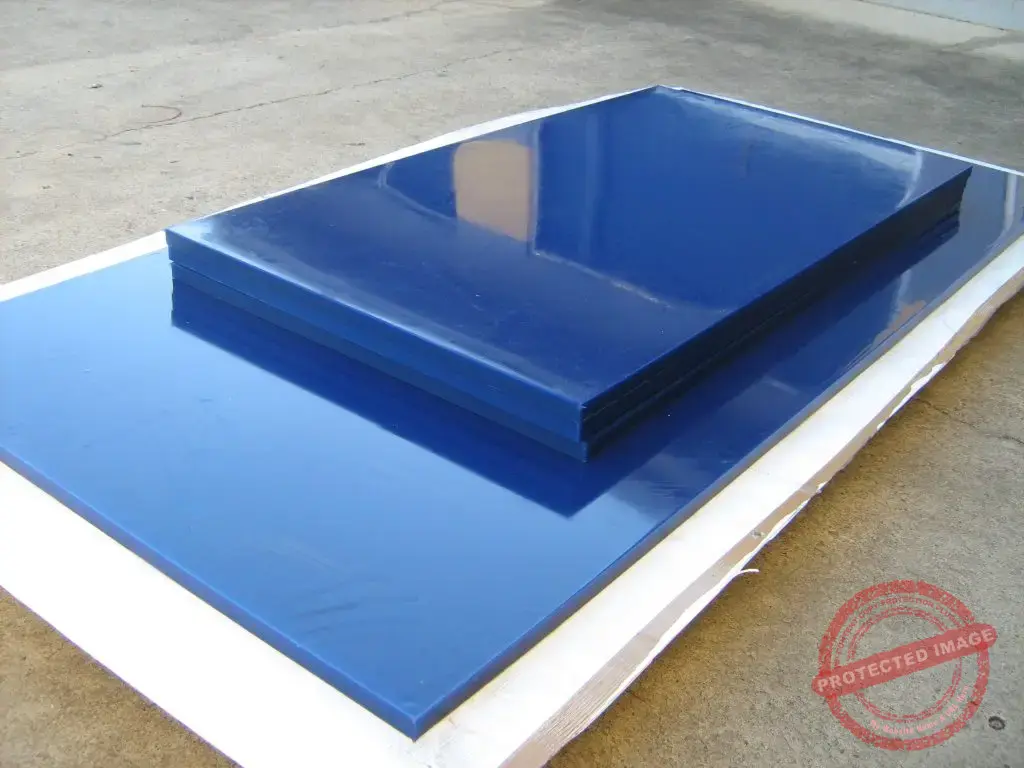
Polyurethane Sheet, Rod & Tube
Cast polyurethane sheet, rod, tube and bushes in standard and custom dimensions. Harder-wearing than rubber, stiffer than nylon.
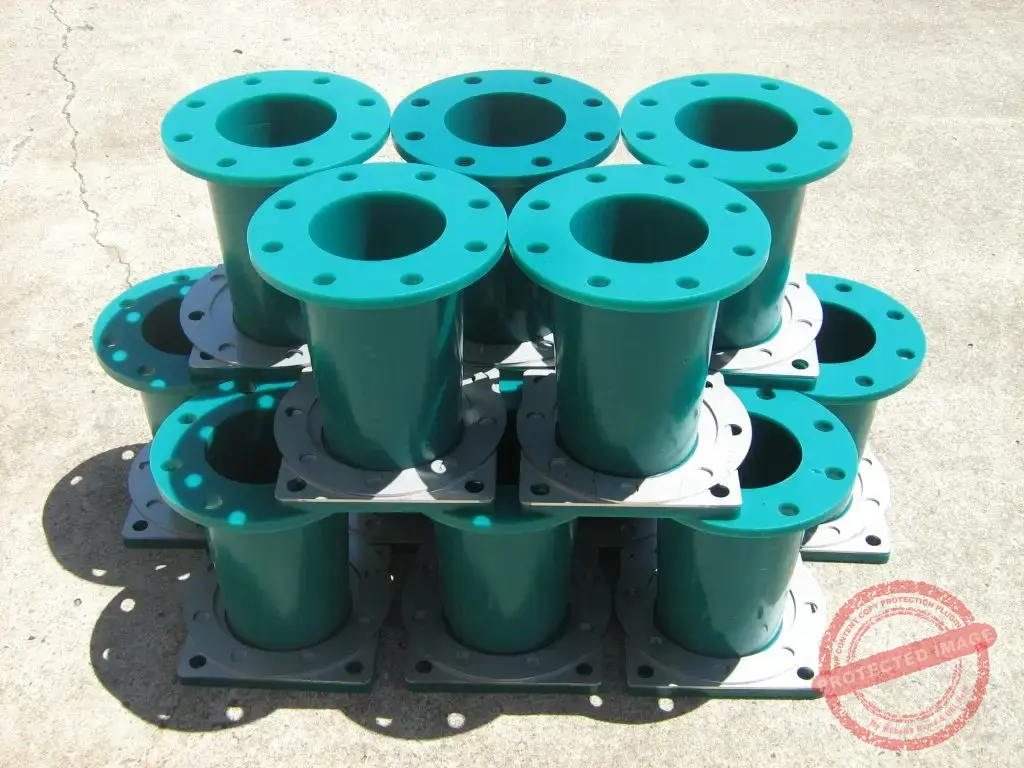
Custom Moulded Polyurethane
Full custom moulding from prototype to production run. In-house tooling, SolidWorks CAD, runs from 1 to 1,000+. No minimum order.